
LOAM Science Review by a Dietitian — Prebiotic Fiber Supplement Benefits
Here’s the truth: about 95% of American adults don’t eat enough fiber. The recommended daily intake is 25 to 38 grams, but most of us get around 15. That gap matters more than most people realize, because fiber does more than keep you regular. The right types of fiber feed your gut microbiome, which affects digestion, blood sugar, appetite, and immune function.
As a registered dietitian and certified diabetes care and education specialist, I focus on food first. I also know life gets busy. If you’re traveling or still building the habit of eating enough fiber, a well-formulated prebiotic fiber supplement can help close the gap. That’s where LOAM comes in.
What Are Prebiotics?
Prebiotics are types of fiber your body can’t digest, but your good gut bacteria can. Those bacteria ferment prebiotic fiber into short-chain fatty acids (SCFAs) like butyrate, propionate, and acetate. Butyrate is the main fuel for the cells lining your colon and helps keep your gut barrier healthy. SCFAs also help regulate the hormones behind fullness and blood sugar control, which is why gut health and metabolic health are so closely linked.
Probiotics add new bacteria. Prebiotics feed the good bacteria you already have. Probiotics need prebiotics to thrive.
What’s in LOAM Prebiotic Fiber Formula?
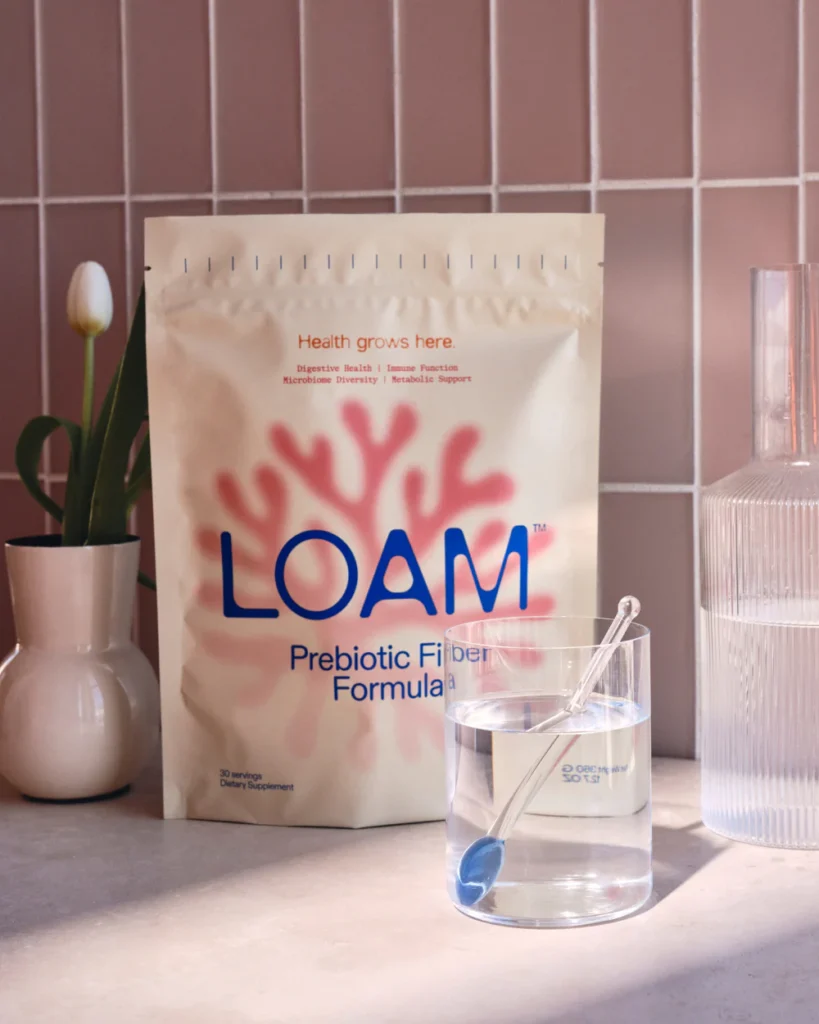
Each scoop of LOAM has 10 grams of dietary fiber from six prebiotic fibers:
- Partially hydrolyzed guar gum (PHGG)
- Xylooligosaccharides (XOS)
- Soluble carrot fiber (rhamnogalacturonan-I, or RG-I)
- Soluble tapioca fiber
- Soluble wheat fiber
- Soluble corn fiber
Why six fibers? Different gut bacteria thrive on different fibers. A diverse blend supports a more varied microbiome and tends to ferment more slowly, which may mean less gas and bloating than single-fiber products. LOAM is unflavored, has no added sugar, and dissolves easily in water, coffee, or smoothies.
What Does the Research Show?
LOAM ran its own 30-day, double-blind, placebo-controlled trial (called GRASP, with 47 adults). Participants taking LOAM ended up with a significantly different microbiome than the placebo group. The most enriched bacterium was Roseburia, a key butyrate producer. Fiber-fermenting bacteria like Prevotella and Parabacteroides also increased, and microbial diversity held steady, while it dipped slightly in the placebo group.
My take: these results are promising, but it’s too early to draw firm conclusions. The trial was small, included only healthy adults, and hasn’t been published in a peer-reviewed journal yet. The individual ingredients have stronger research behind them. PHGG, for example, has been studied for improving regularity and reducing bloating, including in people with IBS.
How to Start a Prebiotic Fiber Supplement
- Start slow. Take half a scoop for 3 to 4 days, then build up gradually.
- Drink more water. Fiber needs enough fluid to do its job.
- Keep eating fiber-rich foods. Beans, lentils, oats, berries, chia seeds, and cooled potatoes or rice all support gut health.
- Check with your healthcare provider if you have IBS or IBD, or take medications that could be affected by when you take fiber.
The Bottom Line
Most of us don’t give our gut enough fuel. A diverse prebiotic fiber supplement like LOAM is an easy way to help close the fiber gap, built on ingredients with solid research behind them. Use code WHITNEYSTUART15 for 15% off at loamscience.com.
Disclosure: I partner with LOAM and earn a commission on purchases made with my code. These statements have not been evaluated by the FDA. This product is not intended to diagnose, treat, cure, or prevent any disease. This post is for education and isn’t a substitute for individualized medical advice.
Whitney Stuart, MS, RDN/LD, CDCES | whitnessnutrition.com