
Your Gut on Summer: 3 Foods That Feed Your Microbiome (+ 3 Recipes to Make It Easy)
By Whitney Stuart, MS, RDN | whitnessnutrition.com

You probably think about sunscreen, hydration, and staying cool in summer. But here’s what most people aren’t thinking about: their gut. And that’s a problem — because 70% of your immune system lives there.
Here’s the thing: most Americans aren’t eating enough to support it. Not in protein. Not in calories. In fiber. Ninety-five percent of us fall short every single day. No matter where I look in my practice, fiber is the gap — and summer is actually one of the best times to close it, because the foods that do it best are everywhere.
Today I’m sharing three of my go-to gut health tools — the ones I brought to NBC — along with exactly how to use them and the recipes I demo’d on air.
First: Prebiotics vs. Probiotics — What’s the Difference?
Before we get into the foods, this distinction matters.
Probiotics are live beneficial bacteria. They’re the workers. Prebiotics are the fiber that feeds those bacteria. Think of it like a garden: probiotics are the seeds, prebiotics are the soil and fertilizer. You need both — and food is the best delivery system for both.
When you eat a food that contains both? That’s called a synbiotic, and it’s the gold standard for gut health.
1. Washington Red Raspberries — The Prebiotic Powerhouse
I’m a Washington native, so frozen raspberries have always lived in my freezer. But beyond nostalgia, the data on these is hard to ignore.
One cup delivers 8 grams of fiber — one of the highest amounts you’ll find in any fruit. That fiber is literal fuel for your good gut bacteria, which makes raspberries a prebiotic food. On top of that, they’re loaded with polyphenols (antioxidants that gut bacteria love), and they’re low glycemic, so they won’t spike your blood sugar.
The reason I reach for frozen is that Washington growers harvest and freeze at peak ripeness. That means you’re getting full nutritional value year-round — not a berry that sat in a refrigerated truck for two weeks. When you’re shopping, flip the bag over and look for “Product of the USA” — that’s your quality signal.
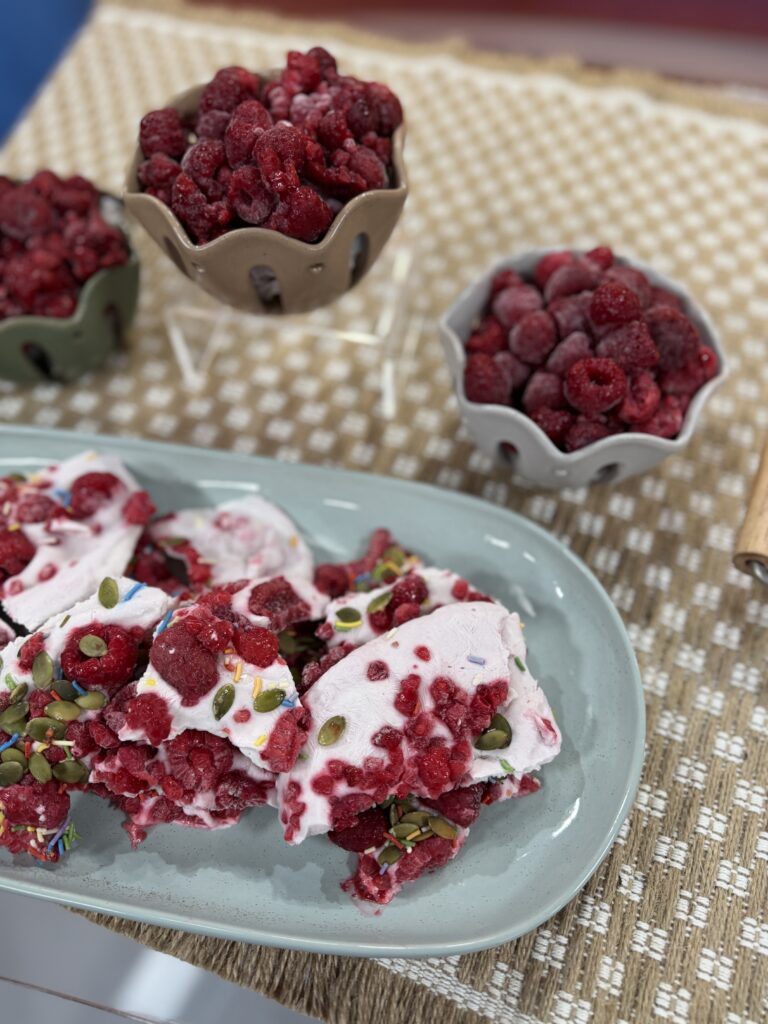
Recipe 1: Frozen Raspberry Yogurt Bark
Raspberries + yogurt = a synbiotic snack. Prebiotic fiber from the raspberries, probiotic cultures from the yogurt, working together. It looks like dessert, functions like medicine, and takes 10 minutes of active time. The ultimate poolside snack.
Ingredients:
- 750g (about 3 cups) Milk & Patience Vegan Coconut Yogurt
- 1 cup frozen Washington Red Raspberries
- 3 tablespoons pumpkin seeds
- Optional toppings: Zen Basil seeds, mini dark chocolate chips, supernatural sprinkles
Instructions:
- Line a baking sheet with parchment paper.
- Mix jam and yogurt together until fully incorporated. Spread evenly onto the parchment — tap the pan on the counter a couple of times to level it out.
- Pat raspberries dry with a paper towel (this prevents ice crystals), then scatter across the top along with your favorite toppings.
- Freeze for 8 hours or overnight.
- Break into pieces and serve straight from the freezer.
Store in a zip-lock freezer bag with parchment between layers. Keeps up to 3 months.
Dietitian tip: Pat those raspberries dry before topping — it’s the difference between bark and a soggy sheet of ice.
2. Yogurt — Your Probiotic Delivery System
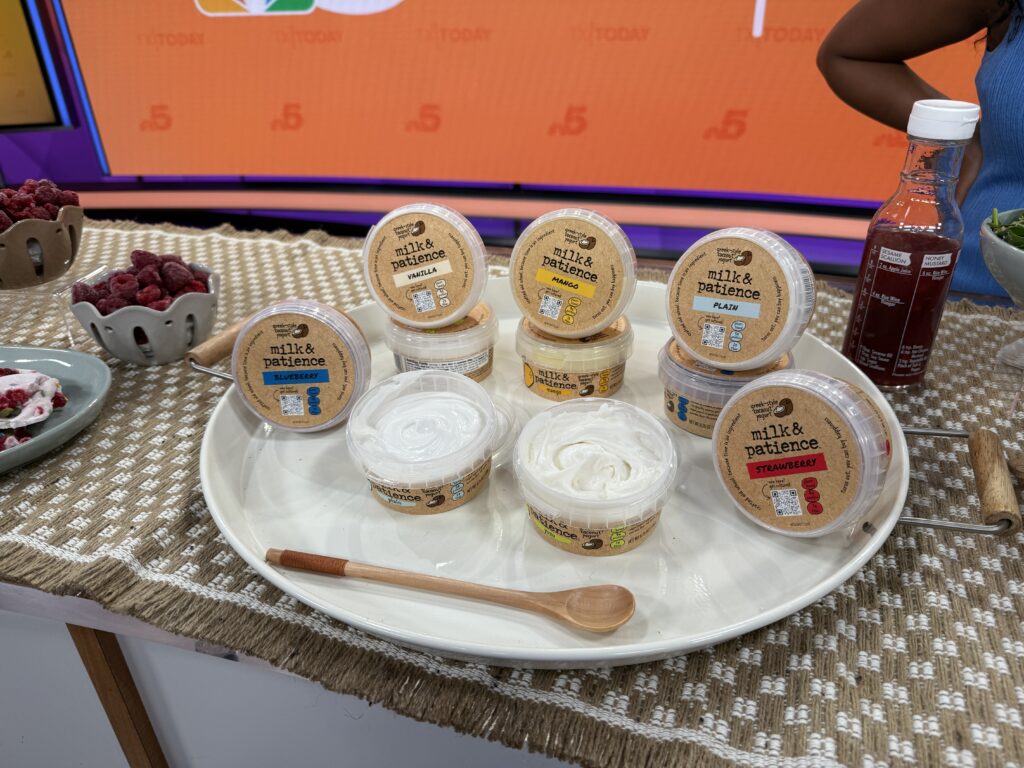
Yogurt is one of the most accessible probiotic foods on the planet. The bacteria in yogurt support digestion, immunity, and — through the gut-brain connection — even your mood.
When I’m evaluating a yogurt, I look for three things:
- Fermentation time — longer = more live cultures
- “Live and active cultures” on the label — non-negotiable
- Minimal added sugar — sugar feeds the wrong bacteria
On plant-based yogurt: most dairy-free versions miss the mark. They’re thin, low in cultures, and filled with additives. The exception I’ve found is Milk & Patience Vegan Yogurt (available at Sprouts nationwide). It’s a Greek-style coconut yogurt — thick, genuinely creamy, with a strong culture count. They make their own coconut milk base and use whole fruit purees. No extracts, no shortcuts.
The key with probiotics: consistency beats quantity. A pill you forget about does nothing. Find a yogurt you actually enjoy and eat it daily.
3. Zen Basil Seeds — The Easiest Fiber Upgrade You’re Not Using
This might be the simplest gut health intervention I’ve recommended in almost a decade of practice.
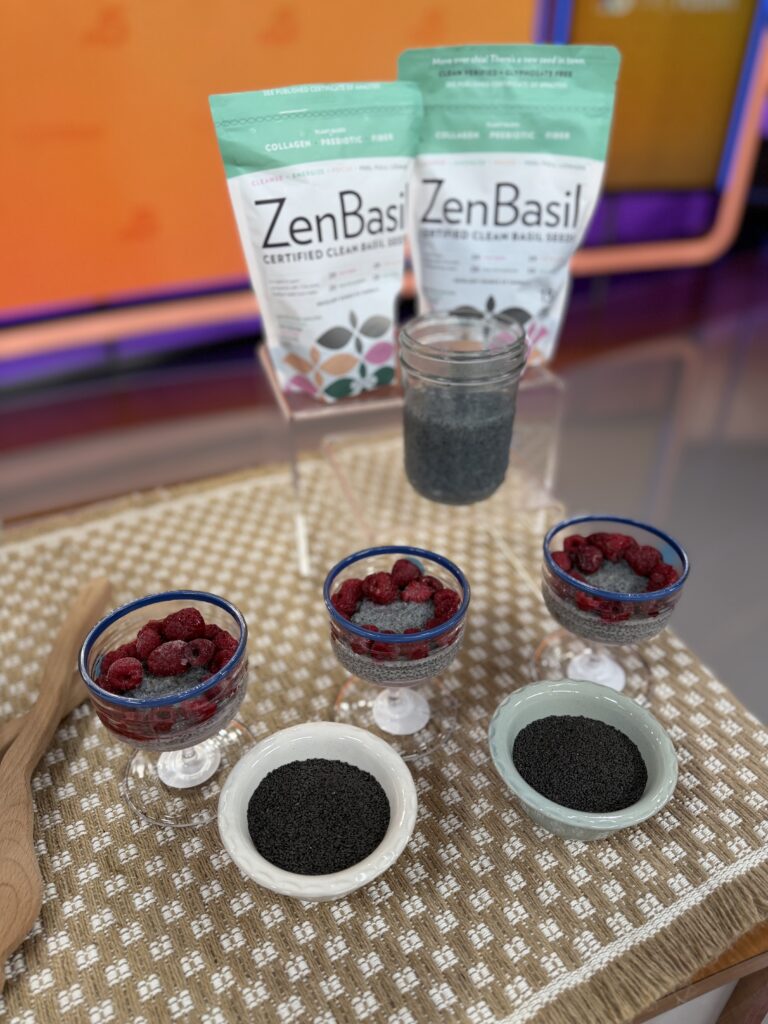
One scoop of Zen Basil seeds delivers 54% of your daily fiber needs. One scoop. That single addition would close most people’s fiber gap entirely.
Beyond fiber, they also bring minerals, plant-based protein, and omega-3 fatty acids — without changing the taste of whatever you add them to.
Here’s what sets them apart from chia: no overnight soak required. They gel in 3 minutes. That’s a game-changer for busy mornings, quick smoothies, or adding to a bowl on the way out the door.
There are over 150 varieties of basil seed out there, but I specifically use and trust Zen Basil because they test for pesticides and glyphosate and publish that data publicly. When I’m putting something in my body every single day — and recommending it to my patients — that transparency matters. They’re on my Sprouts reorder list every week.
Recipe 2: Berry Arugula Salad with Raspberry Vinaigrette
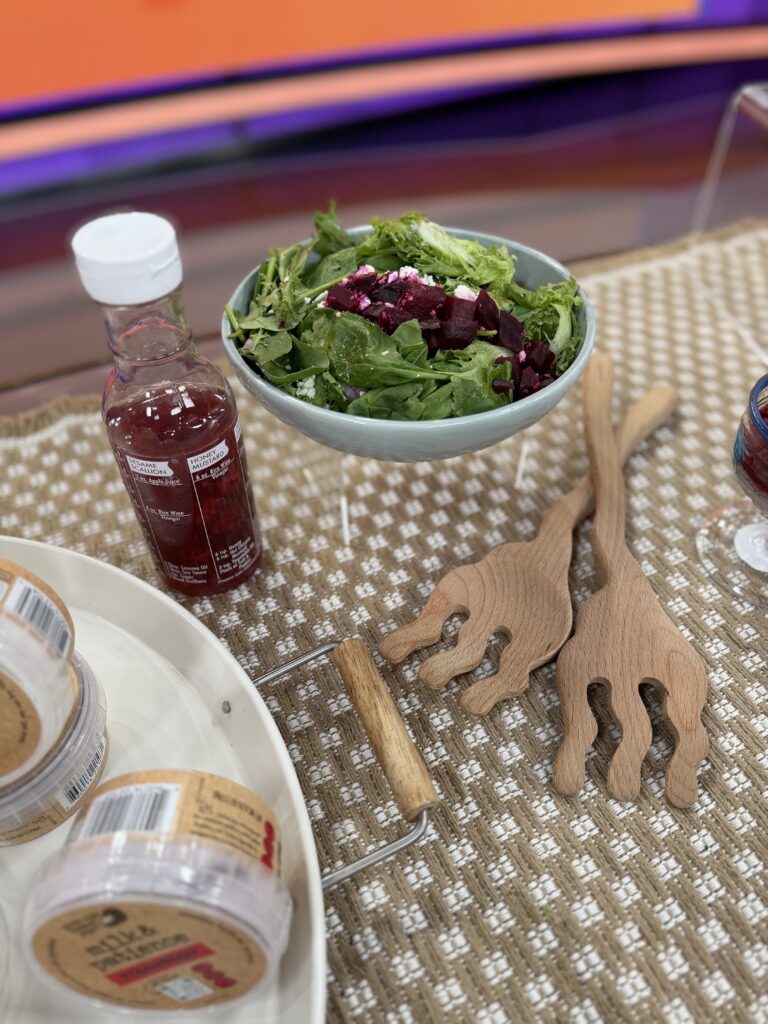
A full microbiome feast in one bowl. The raspberries pull double duty here — in the vinaigrette and on top of the salad — and the Zen Basil seeds add fiber and omega-3s without changing the flavor at all.
For the Raspberry Vinaigrette:
- 1½ cups frozen Washington Red Raspberries, thawed
- ½ cup extra virgin olive oil
- ¼ cup red wine vinegar
- 1 small shallot, diced (about 2 tablespoons) — or 1 small garlic clove if that’s what you have
- 1 teaspoon Dijon mustard (or honey mustard for a sweeter finish — my preference)
- 1 teaspoon honey
- ¼ teaspoon kosher salt
- Black pepper to taste
Add everything to a food processor or blender. Blend for about 30 seconds — you want it creamy but not totally smooth; a little texture is nice. Store in a jar in the fridge for up to one week. No added sugar, no high fructose corn syrup, no Red 40. Just real food.
For the Salad:
- 4 cups arugula
- ¼ cup crumbled goat cheese or dairy-free feta
- ¼ cup walnuts or pecans, toasted
- 1 tablespoon Zen Basil seeds
- Optional: sliced avocado, cucumber, red onion
Instructions:
- Toss arugula with enough vinaigrette to coat.
- Top with raspberries, cheese, nuts, and Zen Basil seeds.
- Serve immediately.
Why it works: Arugula is a cruciferous vegetable with its own prebiotic fiber. Raspberries add more. Zen Basil seeds add 54% of your daily fiber in one tablespoon. Walnuts bring polyphenols. Your gut bacteria are having a feast.
Bonus: Zen Basil Seed Triple-layer berry parfait
The simplest gut-health breakfast.
Ingredients:
- 1 cup yogurt (Milk & Patience blueberry yogurt)
- 1 tablespoon Zen Basil seeds
- ½ cup frozen Washington Red Raspberries, thawed
Instructions:
- Add yogurt to the ⅓ of the bowl
- Add 1 TB of Zen Basil Seeds to 1 TB of water. Wait 3 minutes.
- Top yogurt with gelled Zen Basil seeds as a second layer.
- Top with raspberries.
- Done.
This is a full synbiotic meal — prebiotics from the raspberries and basil seeds, probiotics from the yogurt, all in under 5 minutes.
The Bottom Line
Your gut microbiome has roughly 38 trillion bacteria, and what you eat can shift its composition in as little as 24 to 48 hours. That’s not a long game — that’s today’s lunch.
Fiber intake is the single biggest predictor of a healthy, diverse microbiome. Start with one of these three tools. Add frozen raspberries to your freezer, pick up a quality yogurt, grab Zen Basil seeds at Sprouts. Build the habit before you think about the supplement aisle.
Your gut will tell the difference fast.
Whitney Stuart is a registered dietitian nutritionist and founder of Whitness Nutrition. She specializes in evidence-based nutrition for metabolic health, gut health, and sustainable wellness.